

Expert analysis at the intersection of AI, bioinformatics, and genomics. Breaking down the science shaping precision medicine — from whole-genome sequencing and liquid biopsy to spatial transcriptomics, proteomics, and metabolomics — grounded in peer-reviewed literature and written for the people building the next generation of life sciences products.
Search the blog by entering the keywords below and hitting “Enter“
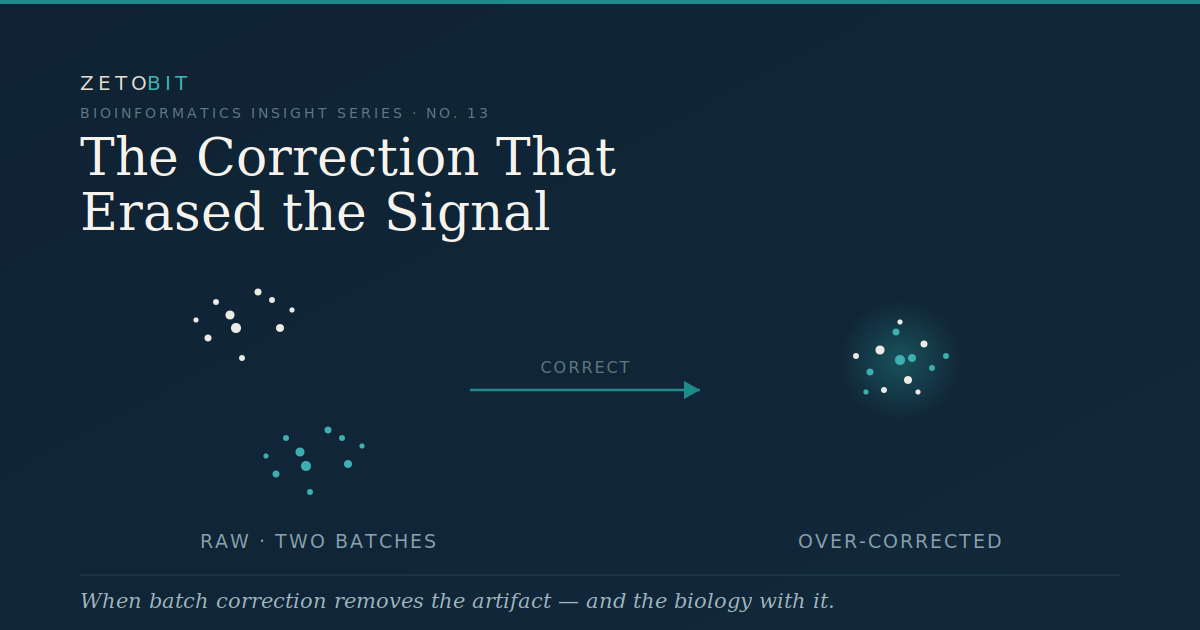
The Correction That Erased the Signal
You ran three 10x lanes, and on the raw UMAP the cells split by lane before they split by anything biological — a textbook batch effect. So you integrate, and the lanes dissolve into one clean manifold. But did the method remove a technical artifact, or quietly homogenize real biology along with it? Both look identical on a plot. Insight No. 13 unpacks the batch-removal versus biology-conservation trade-off, the paired metrics that catch over-correction (kBET, iLISI, cLISI), what the major benchmarks actually recommend, and why a suspiciously clean UMAP deserves the same skepticism as a variant call with no supporting reads.
The Pipeline Ran. Did It Run the Same?
A pipeline that finishes without error feels like a success. But "it completed" and "it would complete identically next quarter, on another cluster, for an auditor" are very different claims — and only the second one matters when the output feeds a clinical report.
Nextflow and nf-core give you every mechanism a reproducible workflow needs. What they don't give you is reproducibility for free. The defaults favor convenience: floating tags, latest versions, whatever reference happens to be on disk.
This article the gap between enabling reproducibility and guaranteeing it — and the unglamorous, entirely mechanical work of closing it.
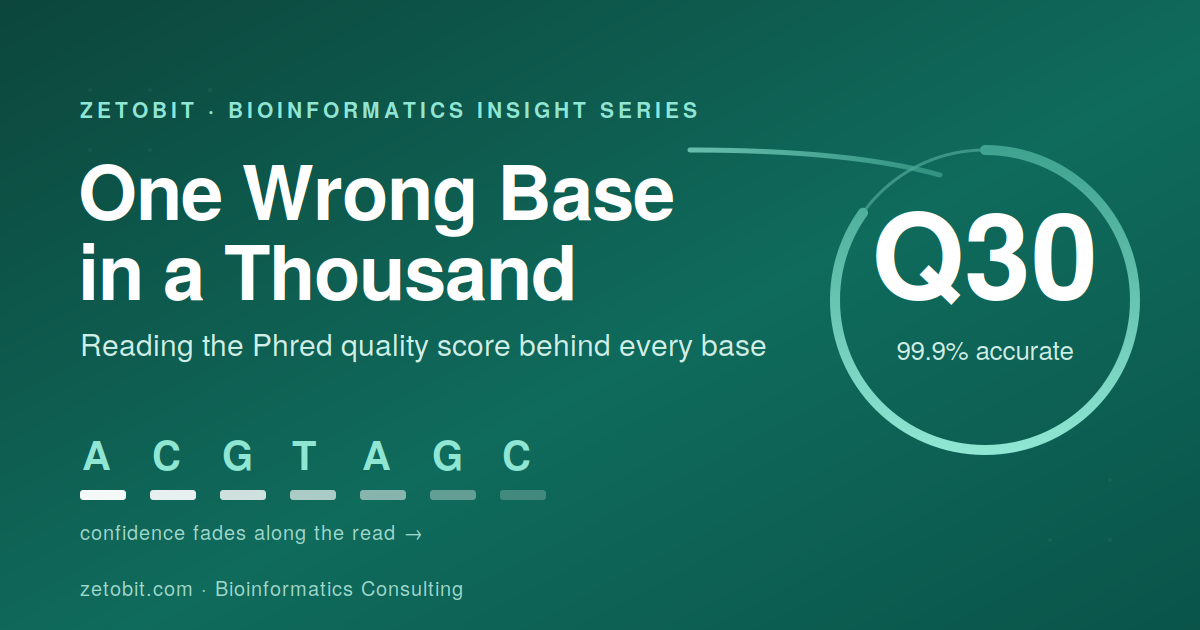
One Wrong Base in a Thousand - Choosing the Q30 cutoff
A sequencing run never really hands you DNA — it hands you millions of educated guesses, one letter at a time, each carrying a small number that says how sure the machine is. That number, the Phred quality score, is the most useful and most overlooked value in all of next-generation sequencing. This plain-language guide unpacks it without the jargon: the single formula behind every score, why Q30 became the industry's shorthand for "good" (one wrong base in a thousand), and how to read the drooping quality curve that every FASTQ file quietly contains. You'll also see where the score stops helping — because a base called with serene confidence can still be in the wrong place. Whether you brief a lab, review a vendor report, or just want "the data looks fine" to mean something you can check, this is where quality scores stop being intimidating.
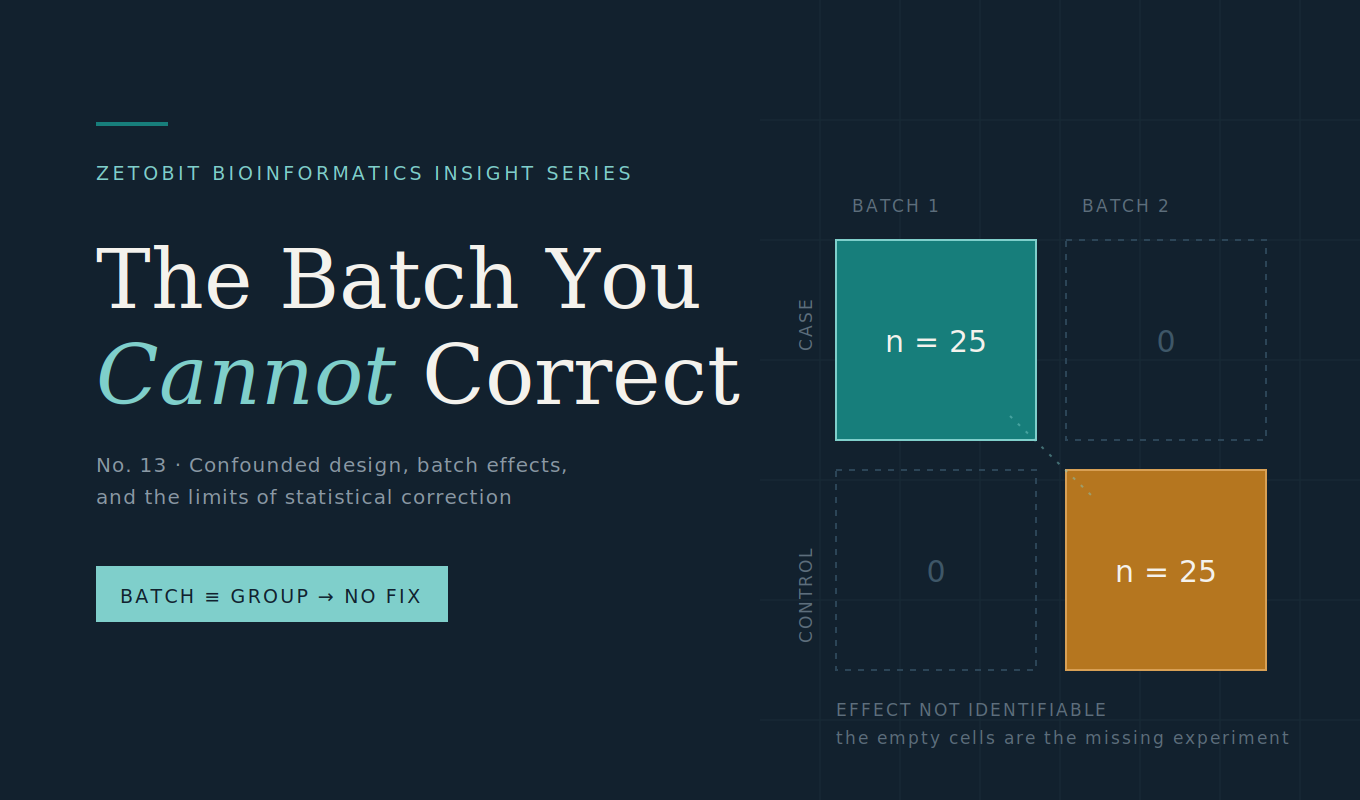
The Batch You Cannot Correct
The Batch You Cannot Correct
Fifty tumors sequenced in March, fifty normals in June. The first principal component splits them cleanly. That component is real — and uninterpretable, because it separates tumor from normal and March from June simultaneously. No operation on the count matrix distinguishes them. This piece argues that batch correction is a statistical procedure, not a time machine: when batch aligns with biology, ComBat doesn't remove the artifact, it launders it — converting a visible design flaw into an invisible inflated p-value. The highest-leverage bioinformatics decision in an omics study is made months before anyone sees a FASTQ.
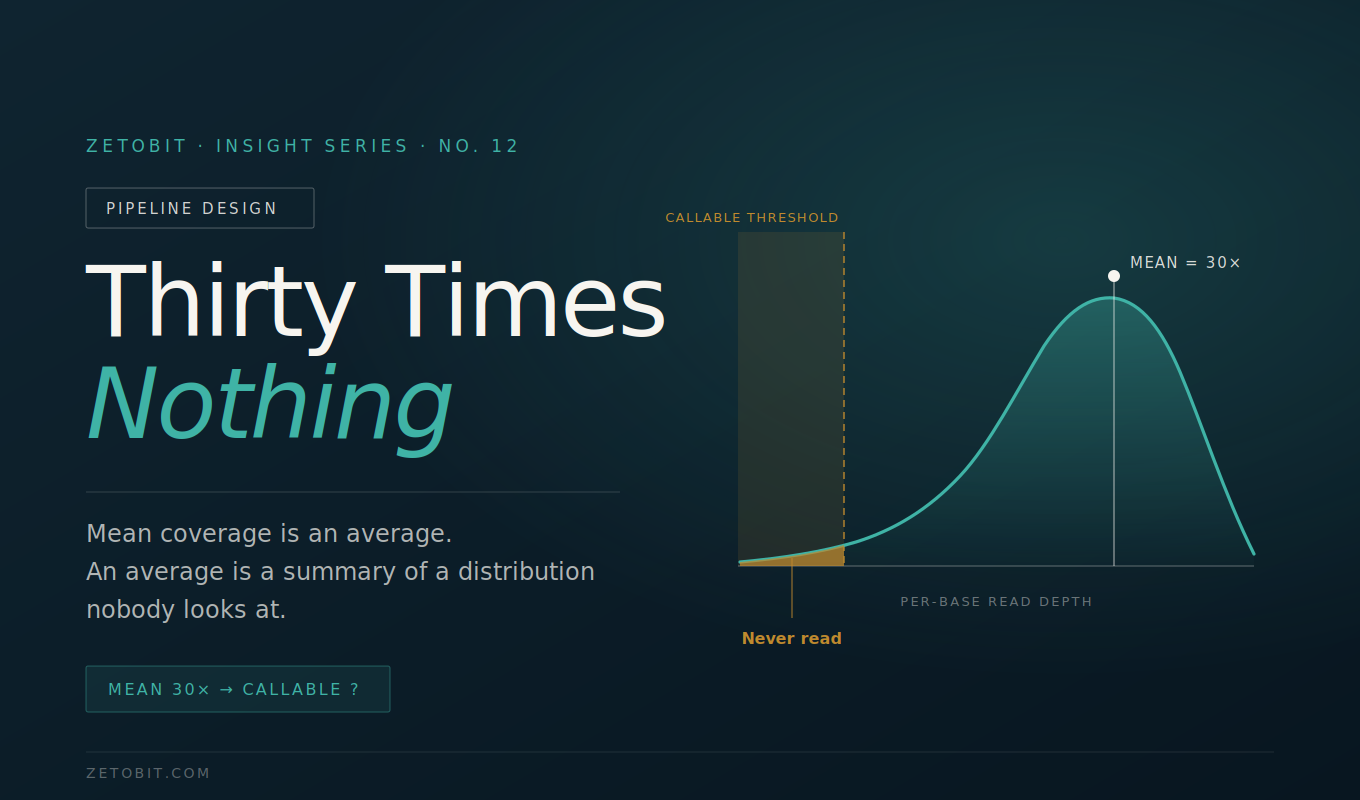
Thirty Times Nothing
Every sequencing quote specifies a number followed by a multiplication sign. Thirty times. Fifty times. The number is treated as a guarantee — as though 30× buys a genome observed thirty times over, uniformly, everywhere. It does not. Mean coverage is a ratio of bases sequenced to genome size, and it is silent on the only question that matters clinically: was the specific base underlying this patient's phenotype ever read? This piece works through the arithmetic, the distribution the arithmetic hides, and why the remedy — reporting callable fraction and a per-gene gap list instead of a mean — is a policy decision rather than a technical one.
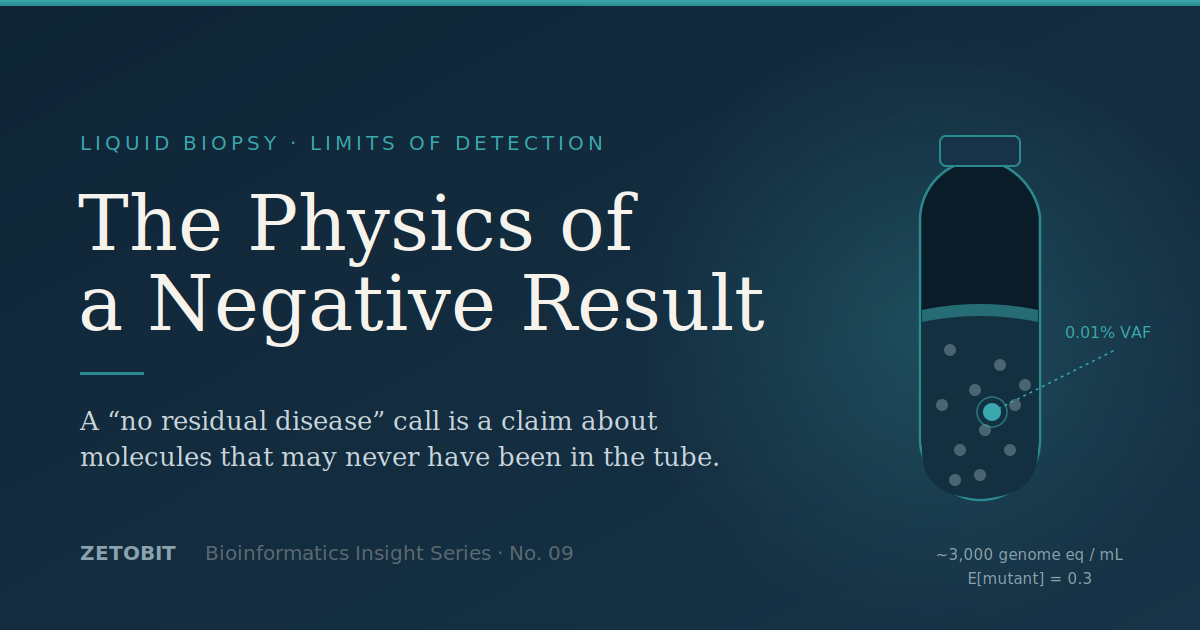
The Physics of a Negative Result
The Physics of a Negative Result
Every liquid biopsy report ends one of two ways: a variant is called, or it isn't. The first invites scrutiny; the second gets accepted at face value. But a negative ctDNA result conflates two different claims—the mutation is absent versus the mutation was never sampled—and the gap between them is set by molecule counting in the tube, not by sequencing chemistry. This piece walks through where the limit of detection actually comes from, why it's bounded by Poisson sampling long before it's bounded by error suppression, and what an MRD pipeline can (and cannot) do about a negative it wants clinicians to trust.
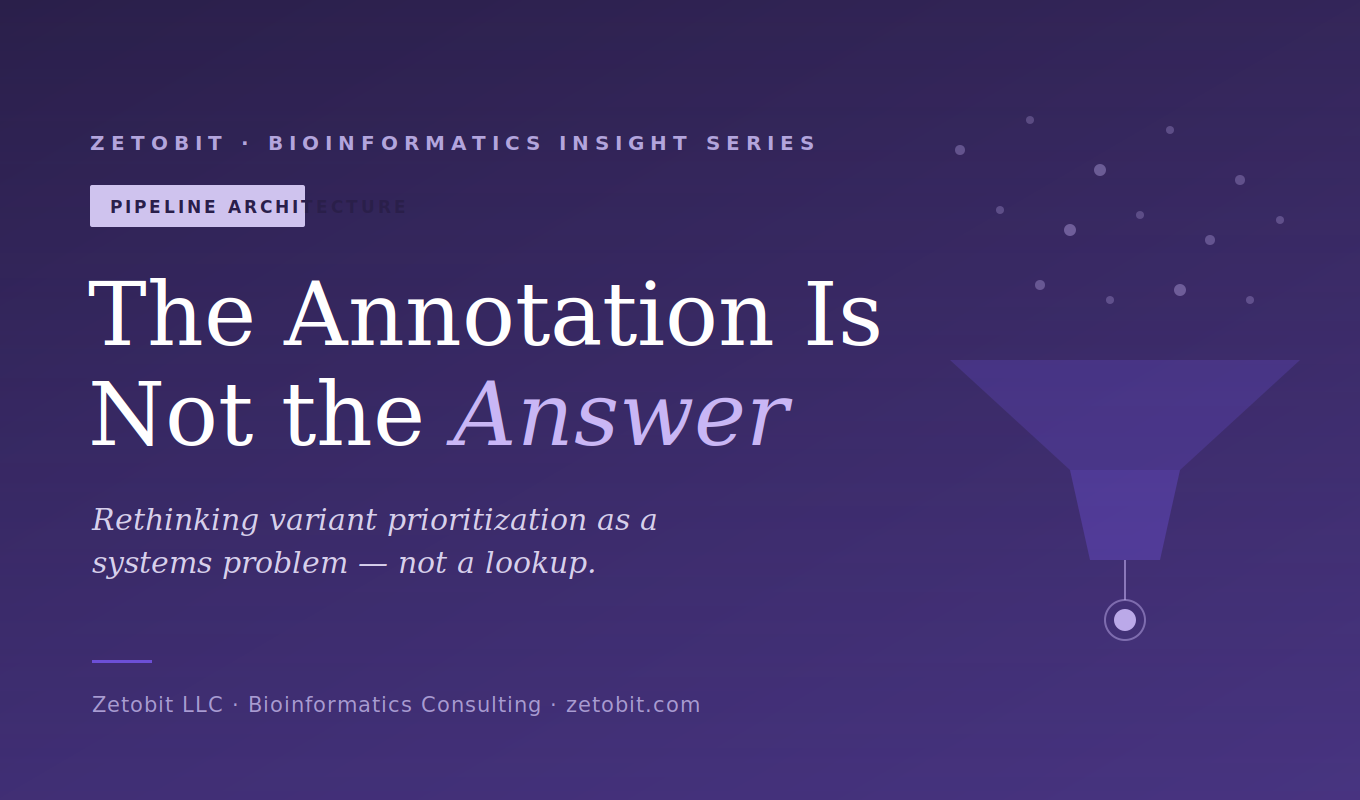
The Annotation Is Not the Answer
A modern exome yields ~20,000 variants; a genome, four to five million. Somewhere in that list may sit the one change that explains a patient's disease — and finding it is rarely limited by sequencing or annotation coverage. It's limited by prioritization: the logic that decides what a human ever looks at. Annotation attaches facts to variants and is largely a solved problem. Prioritization decides which of those variants deserve attention, and in what order — and that's where pipelines quietly succeed or fail. This piece reframes prioritization as a decision architecture: assign every signal a defined role, keep filtering conservative, and calibrate against real case outcomes.
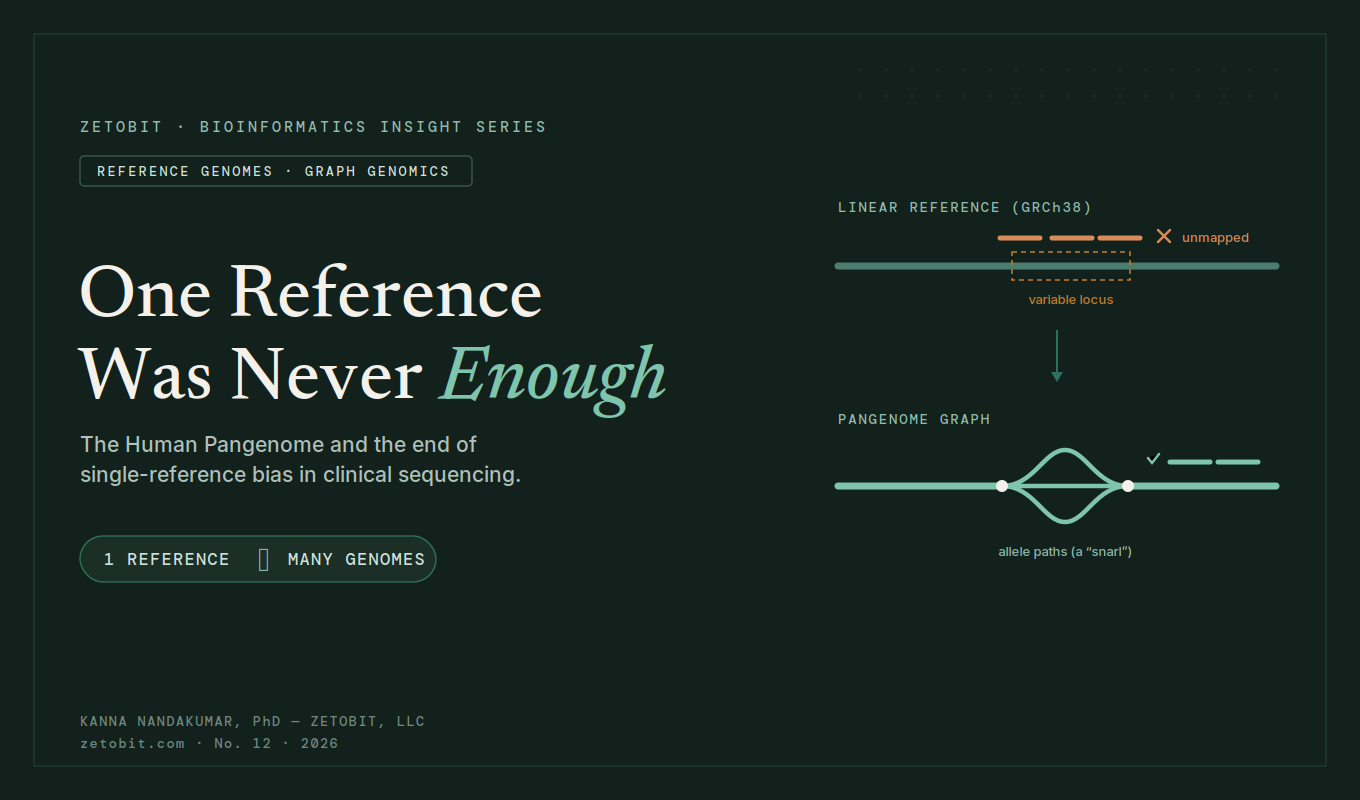
One Reference Was Never Enough
For two decades, nearly every human genome analyzed in a lab was measured against GRCh38 — a single haploid sequence, stitched from the clone libraries of about twenty donors but dominated by just one, and able to represent only one version of each locus. Anything a patient carries that isn't on that path gets inferred, forced to fit, or missed. The Human Pangenome replaces that assumption with a graph of many genomes. On the same short reads, it cut small-variant discovery errors by 34% and more than doubled structural variants recovered per haplotype. Here's what that changes for clinical sequencing.
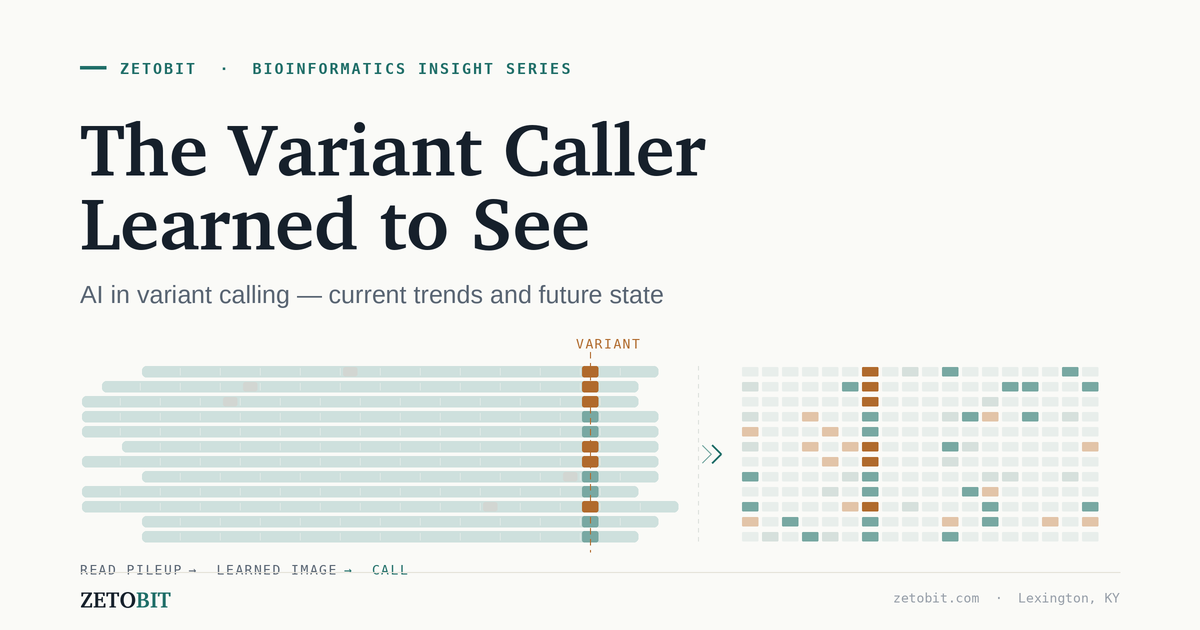
The Variant Caller Learned to See
For most of the short-read era, calling a variant meant authoring a probability model. GATK and its peers encoded a human expert's beliefs about how sequencing errors arise, estimated genotype likelihoods, and applied a stack of hand-tuned filters to separate real variation from artifact. Every threshold was a judgment call, and every callset was only as good as those judgments.
In 2018, DeepVariant threw that model away. It rendered the reads around each candidate site as an image, handed it to a convolutional network trained on truth sets, and let the network learn the difference between a real variant and noise—directly from the data. It generalized across genome builds, species, and sequencing technologies, and swept the PrecisionFDA Truth Challenges. The shift was total: from modeling the error process to learning it.
Today that paradigm is essentially complete for germline SNPs on a clean genome, transformative for long reads, and still genuinely open for somatic and structural variants—which is where the field's real momentum now sits.
This explainer maps where AI-driven variant calling has already won, where it still stumbles on training-data provenance and distribution shift, and what the foundation-model era changes next—with the key publications that mark each turn along the way.
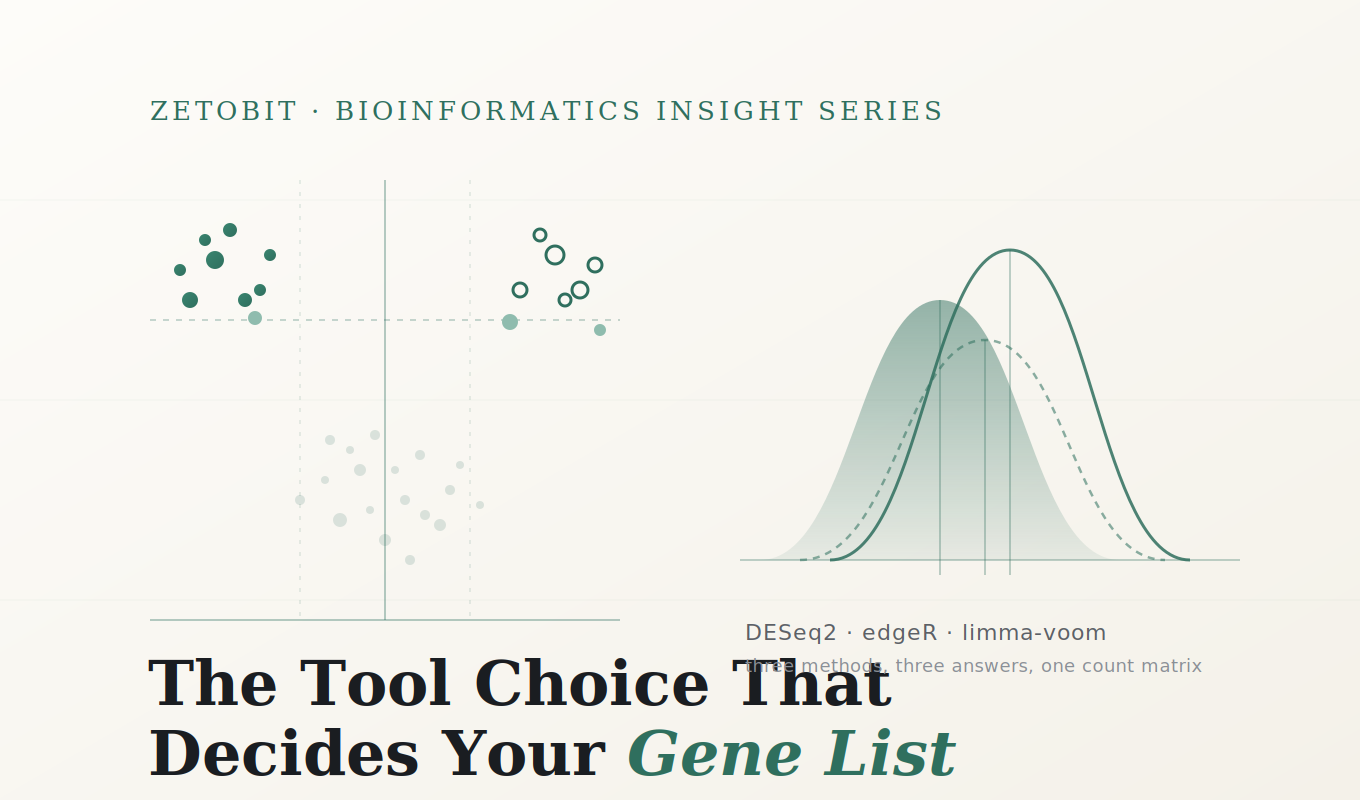
The Tool Choice That Decides Your Gene List
If you have ever run the same RNA-seq count matrix through DESeq2, edgeR, and limma-voom, you already know the quiet problem: three principled, well-validated tools, three overlapping but non-identical gene lists. The overlap is usually large. The disagreement lives at the margins — which is exactly where results get reported, follow-up experiments get funded, and clinical claims get made.
Our latest Bioinformatics Insight Series article unpacks why these methods diverge, when each is the right choice, and how upstream decisions like normalization, low-count filtering, and batch structure move your results more than the package name ever will. We walk through the shared negative-binomial and empirical-Bayes foundation, the regimes where the tools genuinely part ways, and the reproducibility scaffolding that makes a differential expression analysis defensible under peer review or regulatory scrutiny.
The gene list feels objective. It is partly a choice. Read the piece to make that choice deliberately.
#RNAseq #Bioinformatics #Transcriptomics #DESeq2 #ComputationalBiology
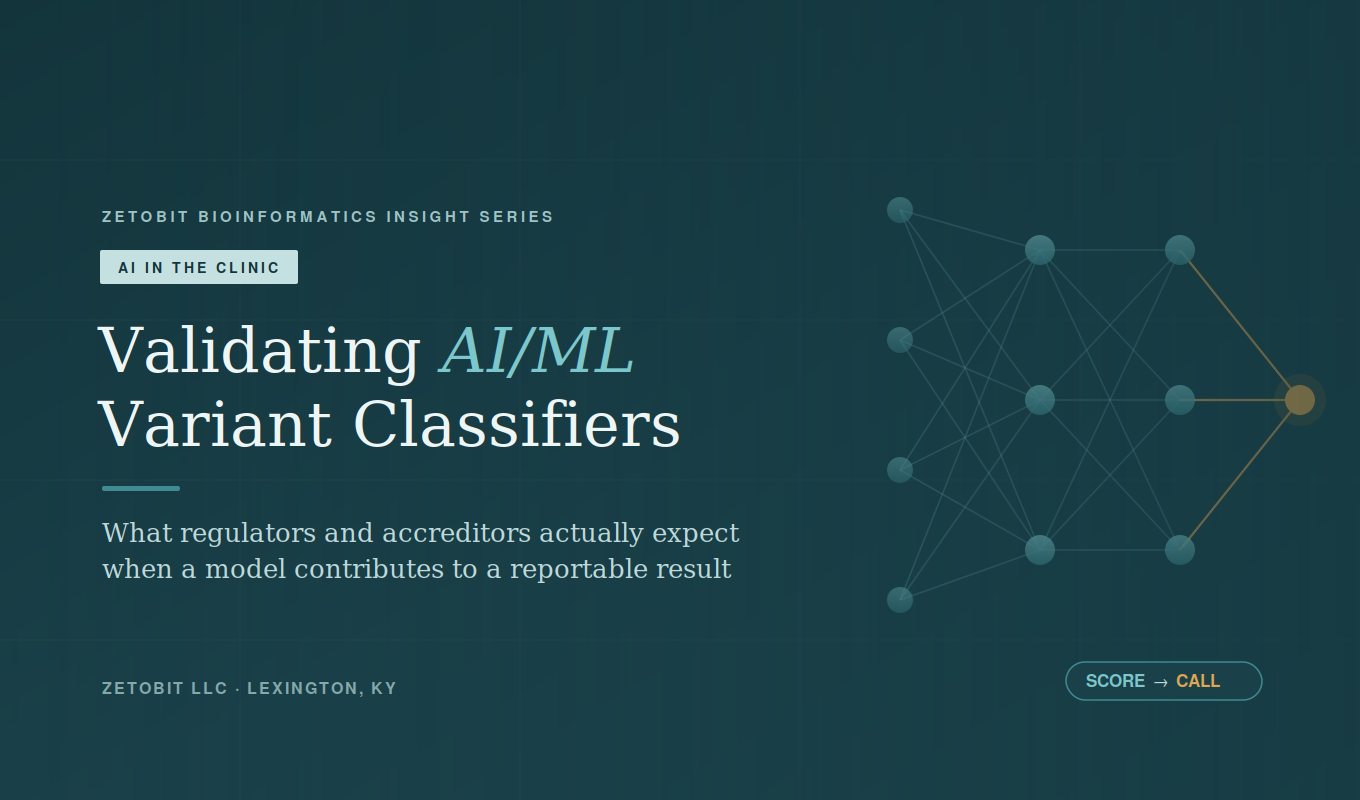
Validating AI/ML Variant Classifiers for Clinical Use
Machine learning now sits at the center of variant interpretation — but a strong benchmark score isn't clinical validation. This piece lays out what regulators and accreditors actually expect: independent reference standards free of circularity, analytical and clinical validity, justified thresholds, and ongoing drift monitoring for AI/ML classifiers in CAP/CLIA-compliant labs.
Variant Reclassification in Clinical Pipelines
A clinical genomics report is a snapshot, not a final answer — interpreted with the evidence available the day it was signed out. As population databases grow and ACMG/AMP criteria are refined, a Variant of Uncertain Significance reported in 2022 may become pathogenic in 2026, with real clinical weight for the patient it was reported in. This article lays out what a defensible variant reclassification program actually requires in a CAP/CLIA-compliant lab: a queryable archive that captures the basis of every classification, a monitoring layer that flags variants for re-review, a tiered decision process for amended reports, and a clear-eyed look at the unsettled question of patient re-contact obligations.
Structural Variants the Short Read Missed
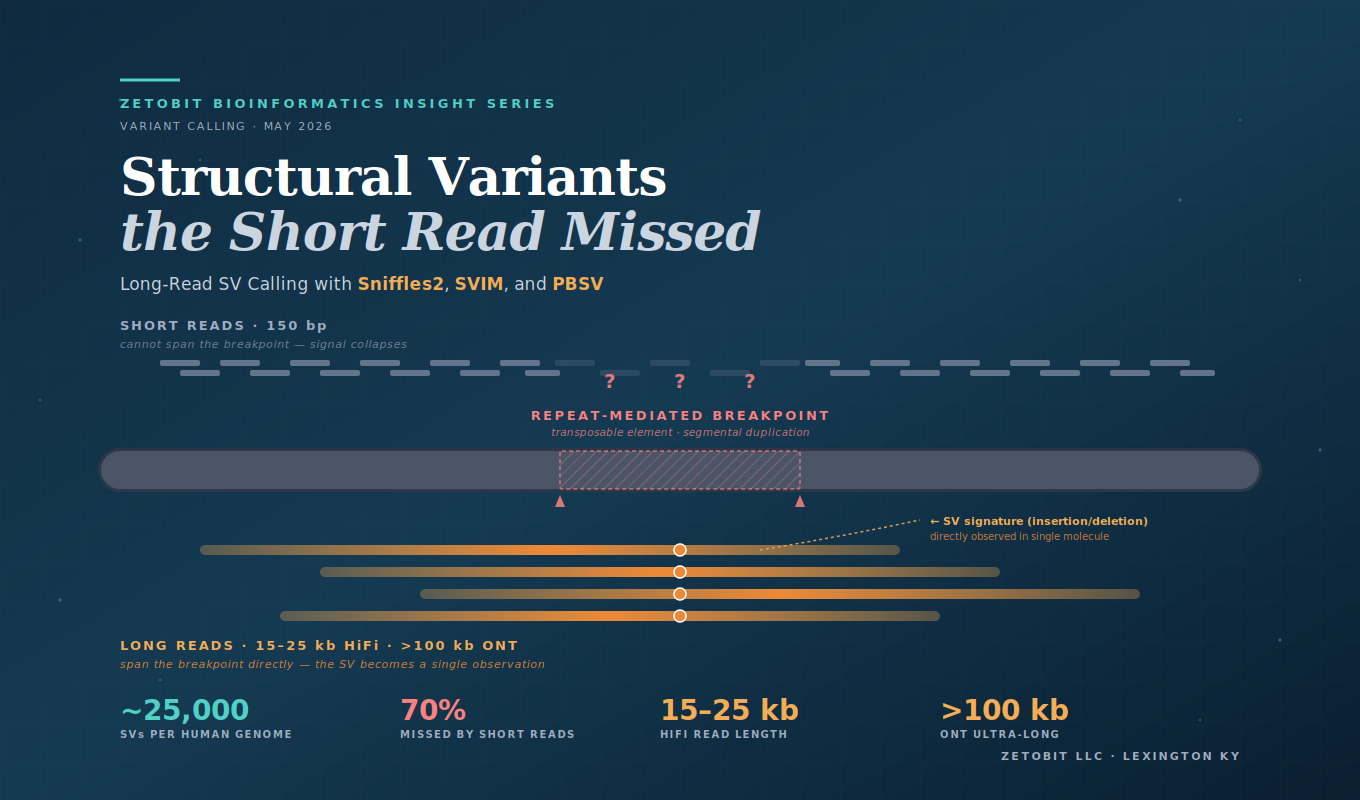
For two decades, short-read sequencing built its reputation on a single trick: piling tens of millions of 150-base-pair reads onto a reference genome and counting the discordances. For single-nucleotide variants and small indels, the trick works beautifully. For structural variants — the insertions, deletions, inversions, duplications, and translocations longer than 50 base pairs that account for more of the genomic difference between any two humans than all SNVs combined — short reads have always been the wrong tool. Roughly 70 percent of structural variants in a human genome are systematically missed by short-read callers, and the ones that are called are often misplaced, misclassified, or detected only because they happened to fall in a region kind enough to lack repeats.
Long-read sequencing has not just incrementally improved this picture; it has rewritten it. A modern PacBio HiFi or Oxford Nanopore run, paired with a long-read-native SV caller like Sniffles2, SVIM, or PBSV, will recover an order of magnitude more structural variants than the best short-read pipeline — with breakpoint precision that finally makes structural variation a clinically actionable category.
This article unpacks why the short-read failure mode is geometric rather than algorithmic, profiles the three callers that now dominate the field, walks the canonical alignment-to-annotation pipeline, benchmarks performance against the GIAB HG002 truth set, and surveys the operational considerations that separate a research-grade SV workflow from a CAP/CLIA-compliant clinical one. We close with the two developments most likely to define the next chapter: pangenome-aware SV calling, and the integration of methylation calling into the long-read variant workflow.
For bioinformatics teams building the next generation of clinical NGS pipelines, the question is no longer whether long-read SV calling belongs in the workflow. It is which caller, which truth set, and which validation envelope.
Cracking Open the Green Genome: A Field Guide to Plant Genome Assembly
Plant genomes are among the most complex in biology — bloated with repetitive sequences, layered with duplicate subgenomes, and spanning sizes that dwarf the human genome by a factor of five or more. Yet a new generation of long-read sequencing technologies and graph-based assemblers has turned chromosome-scale, haplotype-resolved plant assemblies from a decade-long project into a tractable pipeline. This article traces the biological challenges that make plant genomes hard to assemble, the tools — HiFi, ONT, Hifiasm, Verkko, Hi-C — that have transformed the field, and what telomere-to-telomere completeness means for crop breeding, pan-genomics, and the future of agricultural bioinformatics.
From Plasma to Pixels: How AI Is Unifying Liquid Biopsy and Spatial Transcriptomics for Precision Oncology
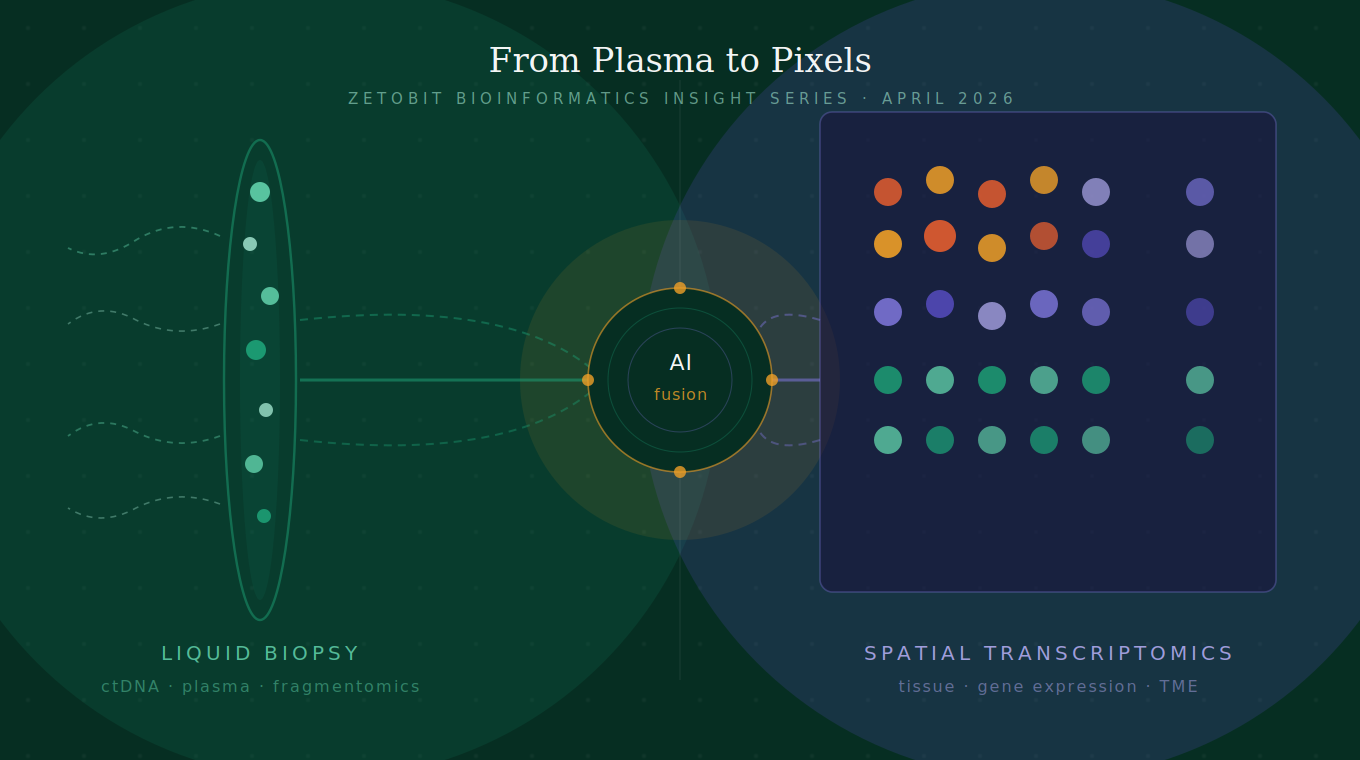
Liquid biopsy tells you what a tumor is shedding into the bloodstream — circulating DNA fragments, methylation patterns, copy number shifts. Spatial transcriptomics tells you where resistance lives in tissue — which cell subpopulations cluster near vasculature, where immune exclusion is occurring, which signaling pathways are active at the tumor margin. Until recently, these two fields evolved in parallel, with separate platforms and separate toolkits. AI is beginning to bridge them. Foundation models, multimodal fusion architectures, and deep learning pipelines are connecting plasma-level signals to tissue-level maps. The convergence is reshaping how we detect, monitor, and treat cancer.
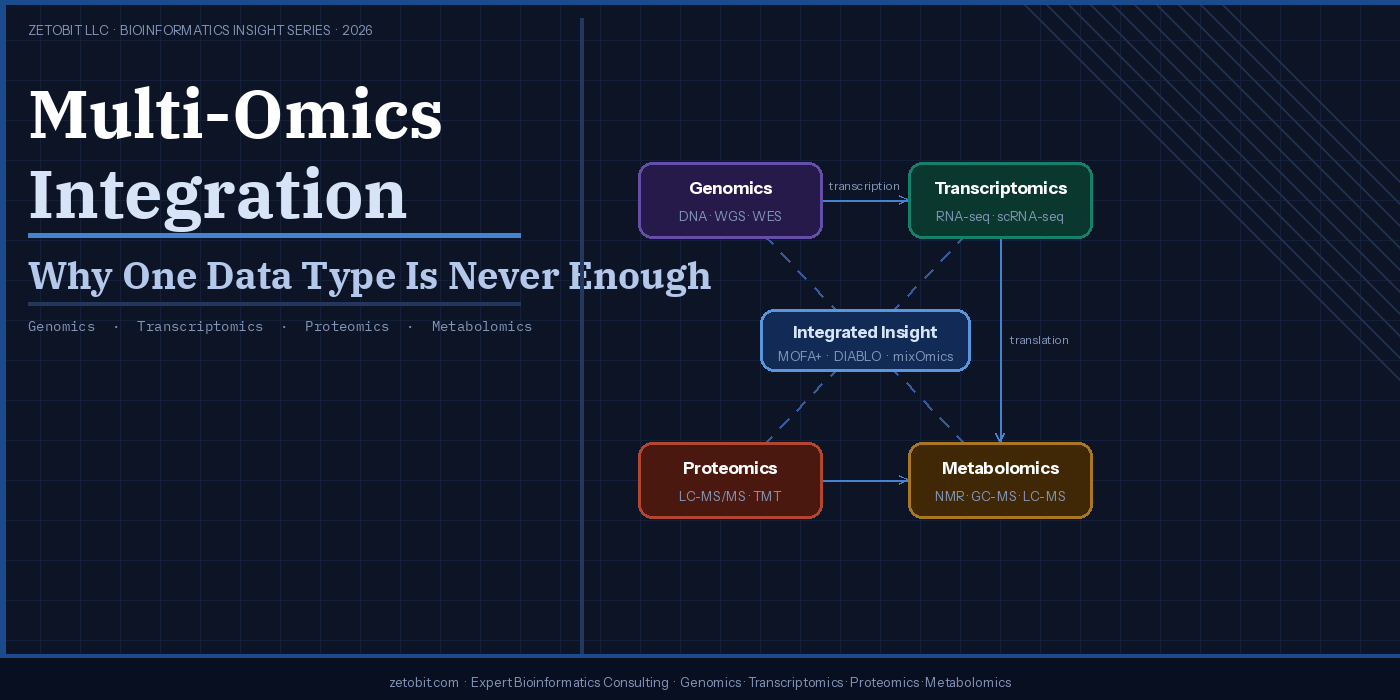
Multi-Omics Integration — Why One Data Type Is Never Enough
Biology doesn't operate one layer at a time. A single mutation can rewire transcription, reshape the proteome, and redirect metabolic flux — yet most studies still capture only one data type. Multi-omics integration combines genomics, transcriptomics, proteomics, and metabolomics to reveal what no single platform can see alone. From TCGA's colorectal cancer breakthroughs to tools like MOFA+ and DIABLO, this article explains why integrated analysis is now the clinical standard — and how to design studies that get it right from the start.
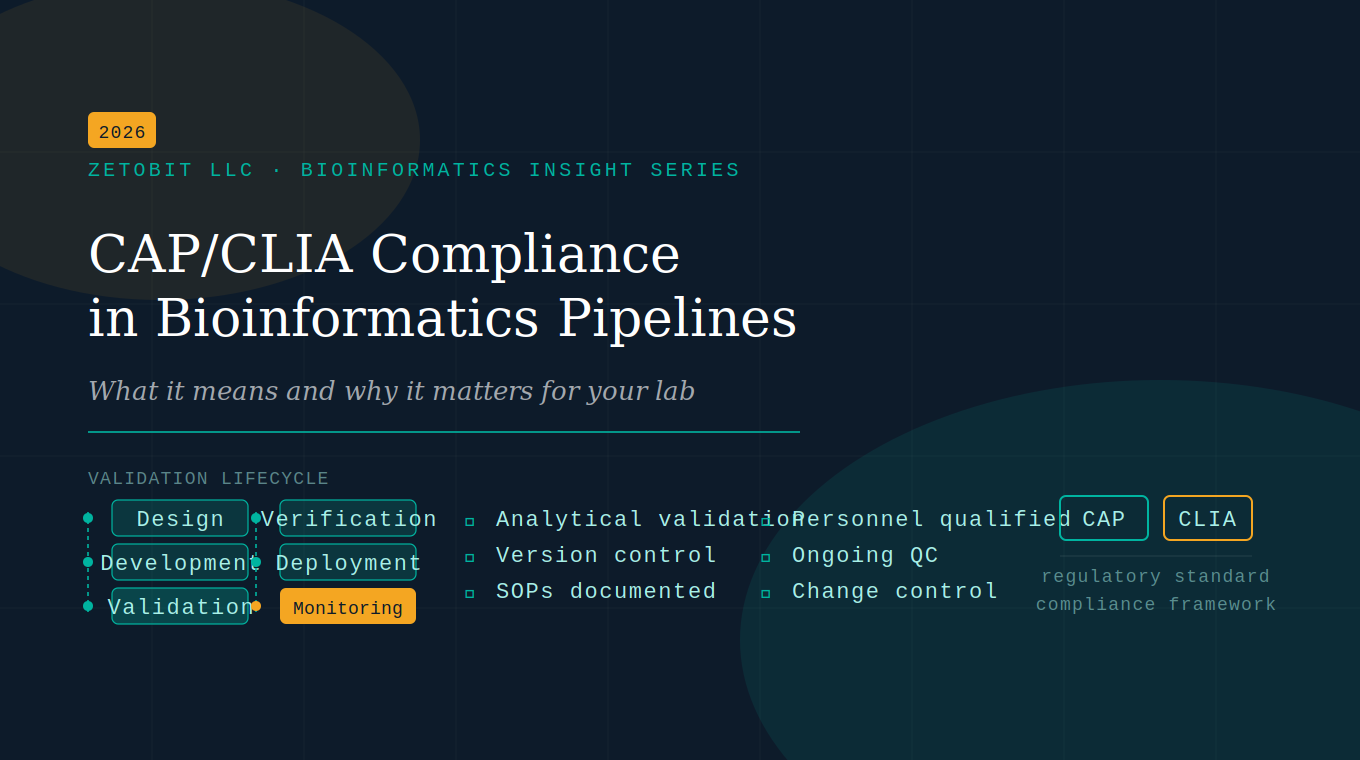
CAP/CLIA Compliance in Bioinformatics Pipelines
Clinical bioinformatics pipelines aren't just a science problem — they're a regulatory one. CAP and CLIA require validation, version control, and documented SOPs for every computational step. This article breaks down what compliance actually demands, where most labs fall short, and how to close the gaps.
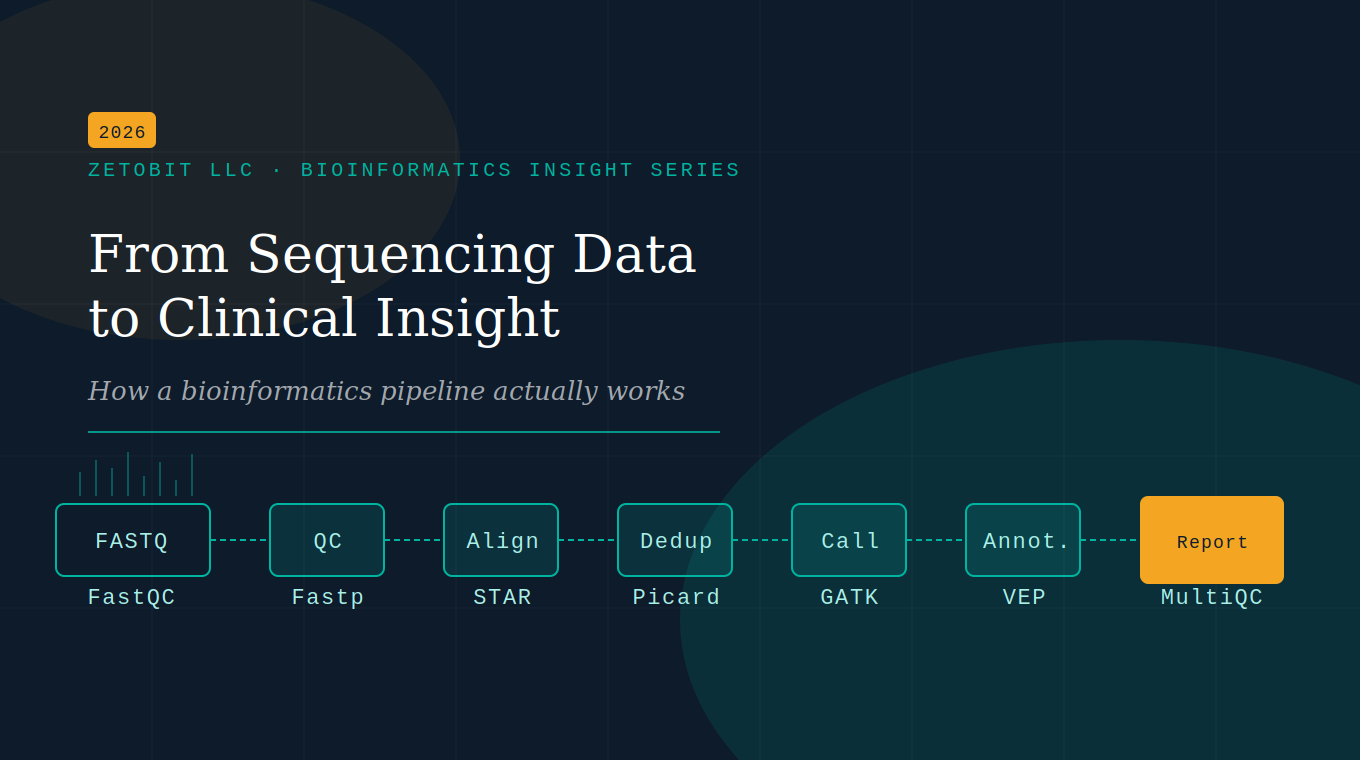
From Sequencing Data to Clinical Insight
Sequencing is only the first step. The real work happens in the bioinformatics pipeline — the computational engine that transforms raw FASTQ files into somatic variants, expression profiles, and clinical insights. This article breaks down every stage, from QC to reporting, in plain language.
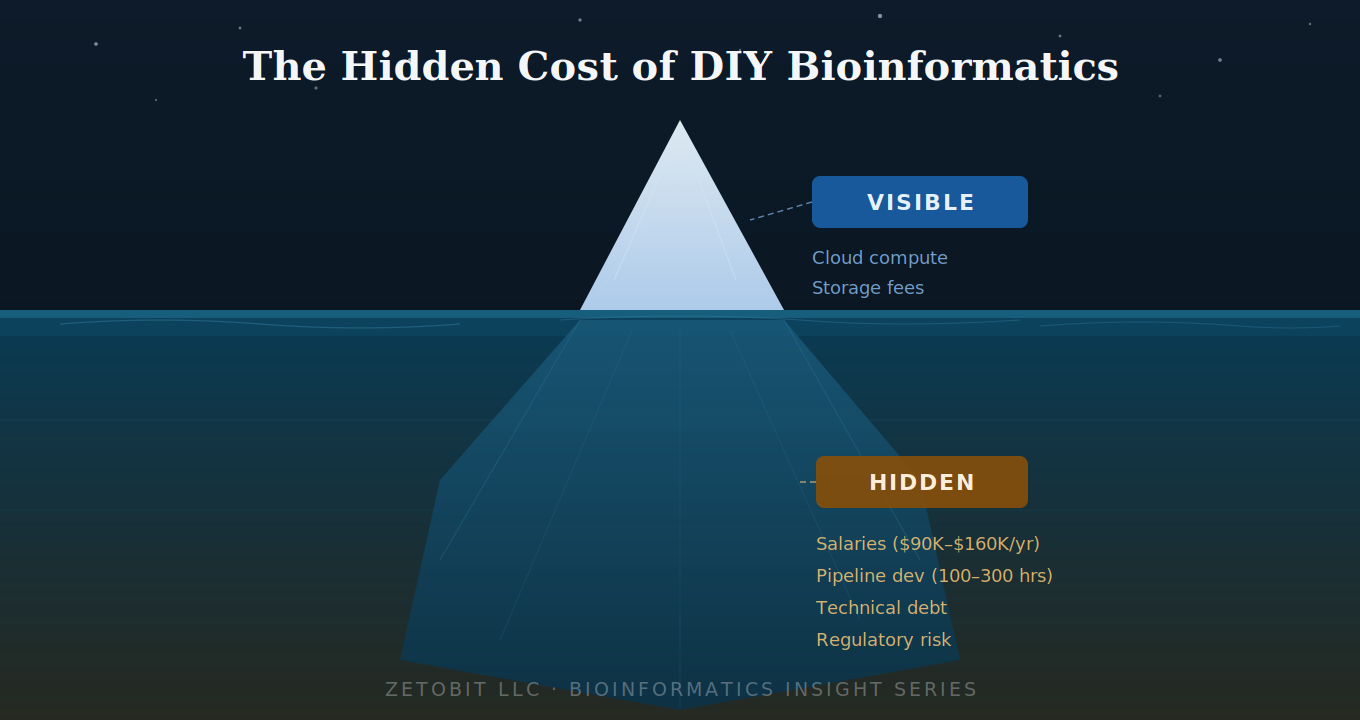
The Hidden Cost of DIY Bioinformatics
Building bioinformatics in-house looks affordable — until you account for what's below the waterline. Salaries, pipeline development, technical debt, and regulatory gaps routinely 3–5× the visible compute costs. For early-stage biotechs and clinical programs, outsourcing to a validated partner is almost always the smarter financial and strategic decision.
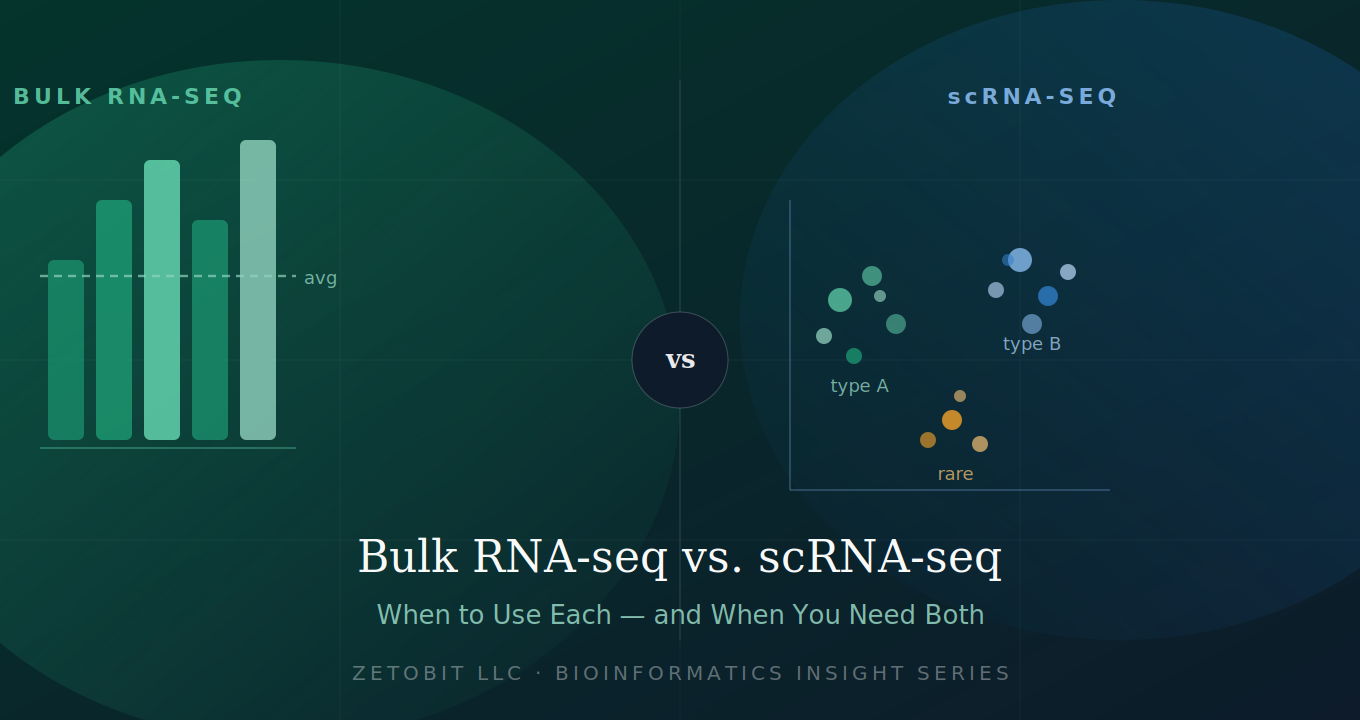
Bulk RNA-seq vs. scRNA-seq — When to Use Each (and When You Need Both)
Not all transcriptomic experiments are created equal. Bulk RNA-seq delivers statistical power across large cohorts; scRNA-seq reveals the hidden cellular heterogeneity bulk data averages away. Choosing the wrong method costs months. This guide helps you match your biological question to the right technology — or decide when you need both.