
Why license your invention?
Manufacturing, licensing and selling are the three ways a patent pays. Licensing is often the fastest.
Recurring income
A manufacturer pays you royalties on what it sells, instead of you funding tooling, inventory and a sales team.
Someone else's factory
Your product reaches the market through a company that already has the production line and the customers.
Rights come back to you
A license is not a sale. When the agreement ends, the rights to your invention revert to you.
Start with an independent evaluation.
Before you pay attorneys or anyone else with a stake in the outcome, get a third-party evaluation of your intellectual property. It tells you what you have, and how to get the most value from it.
Request an evaluationHow licensing works
From the first conversation with a manufacturer to the day the agreement ends, we guide you through each step, and we know where deals tend to stall.
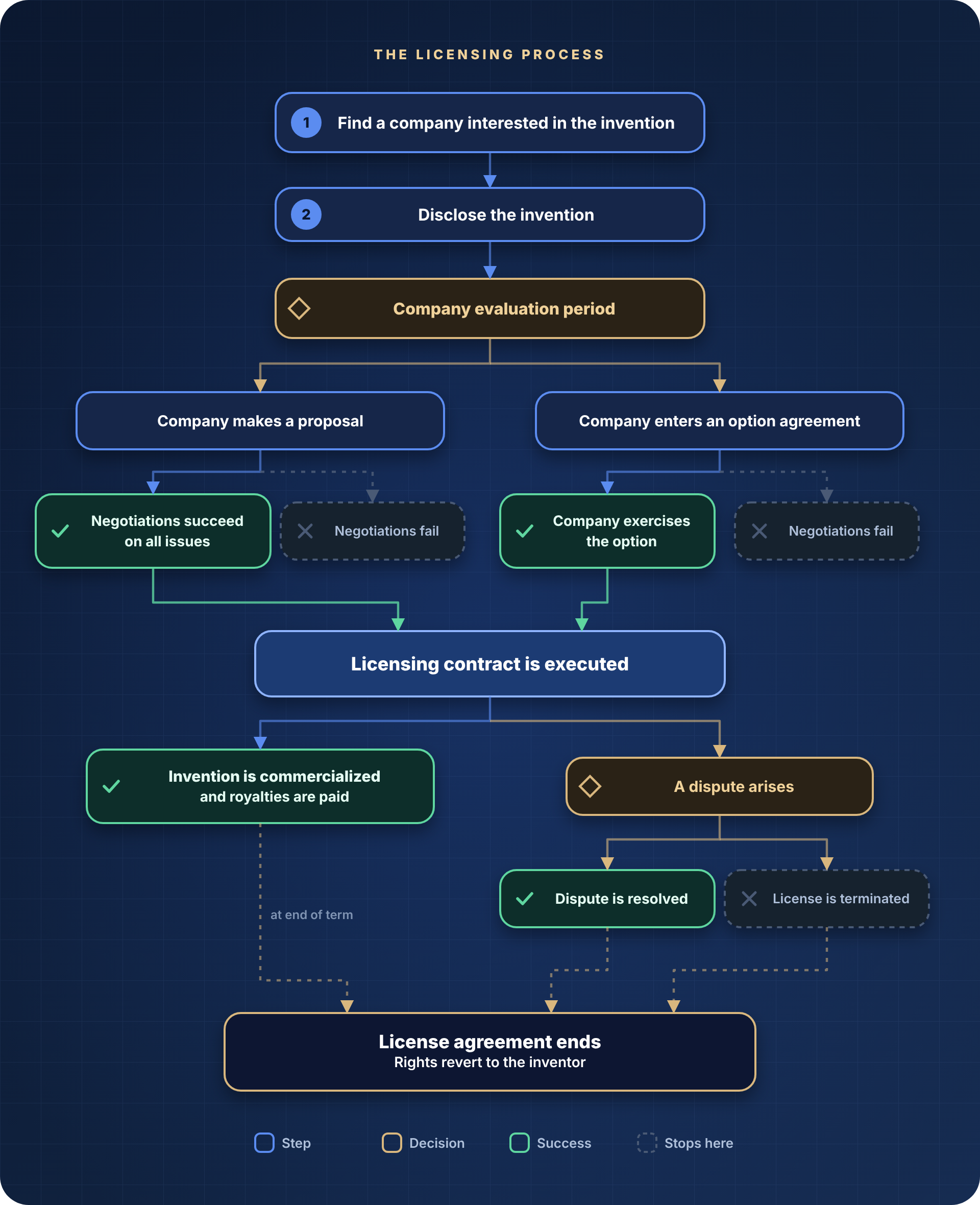
Two ways in: a company makes you a proposal, or takes an option to evaluate your invention before committing.
- 1Find an interested companyIdentify manufacturers whose products and customers fit your invention.
- 2Disclose the inventionShare what the company needs to judge it.
- 3Evaluation periodThe company makes a proposal, or enters an option agreement.
- 4NegotiateAgree on every issue, or the company exercises its option.
- 5Sign the licensing contractYour invention is commercialized and royalties are paid.
- 6Term endsWhen the agreement ends, rights revert to you.
The licensing process, step by step
Every path, including the ones that stop early, and what happens if a dispute comes up.
License your patent
A manufacturer makes and sells your product and pays you royalties. You keep ownership, and rights revert when the agreement ends.
Franchise your business model
[FROM REX: how Praxis helps clients franchise a proven business]
Questions about licensing
Do I need a patent before I can license?
Most licensing deals are built around protected IP, and Praxis focuses on utility patents. Start with an independent evaluation, and we can point you to USPTO-registered professionals when you're ready to file.
What is an option agreement?
An option gives a company a set period to evaluate your invention before deciding whether to license it. If the company exercises the option, you move to a licensing contract.
What happens if the company and I disagree later?
Disputes can come up after a contract is signed. They are either resolved, or the license is terminated. Either way, the rights to your invention eventually revert to you.
I've tried licensing on my own without success. Can you help?
Yes. Many of our licensing clients came to us after struggling to license a product themselves.
What does it cost?
[ANSWER FROM REX: how licensing work is priced]
Ready to put your patent to work?
Book a free one-hour call, or reach us at info@PraxisInnovations.com.