
Three ways to put IP to work
Knowing the marketplace is the key to choosing the best use of your intellectual property.
“Build it, and they will come” almost never works.
When it does, it's the result of a huge marketing campaign. Market research comes first, before you budget any other part of commercializing your product.
An independent, third-party marketing evaluation is essential. Your financial success comes down to the gap between what a customer is willing to pay and what it costs to bring the product to market.
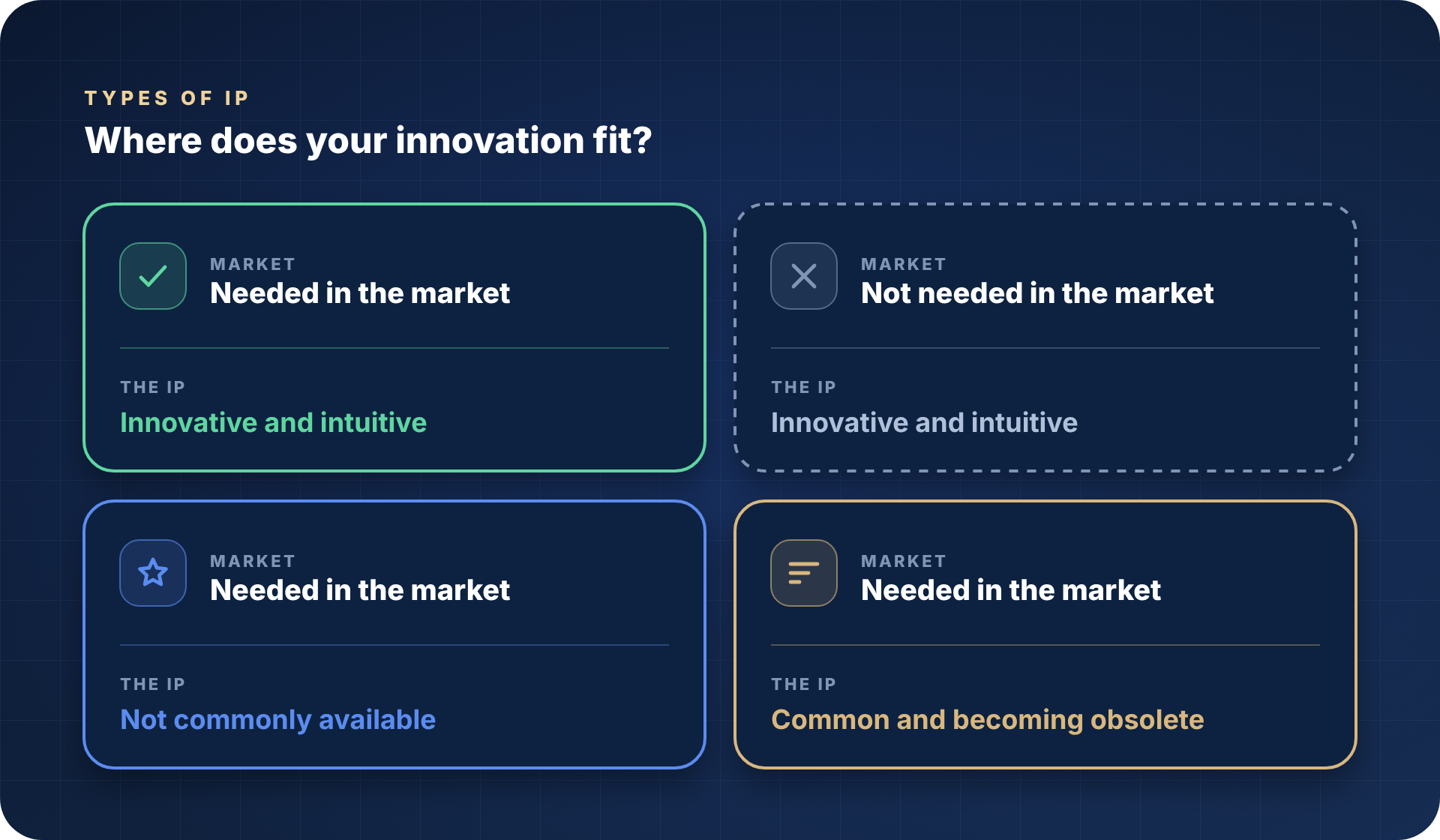
Types of IP
Whether the market needs it, and how new it is, shapes what your IP is worth.
Start small, then scale
As with any new product, it's best to start with a small test entry into the marketplace and see how your target customers react. Many manufacturers specialize in low-run production, then scale on demand.
We've been through this hundreds of times, and know how to make the most of your time and resources.
- 1Research the marketFind exactly where your product fits and who benefits.
- 2Independent marketing evaluationA third-party view of the market and your IP's return.
- 3Identify the key playersCompanies to approach about their interest in your product.
- 4Low-run manufacturingMake a limited number to sell and learn from.
- 5Evaluate the reactionGain the insight you need before committing to scale.
- 6Scale on demandGrow production as the market responds.
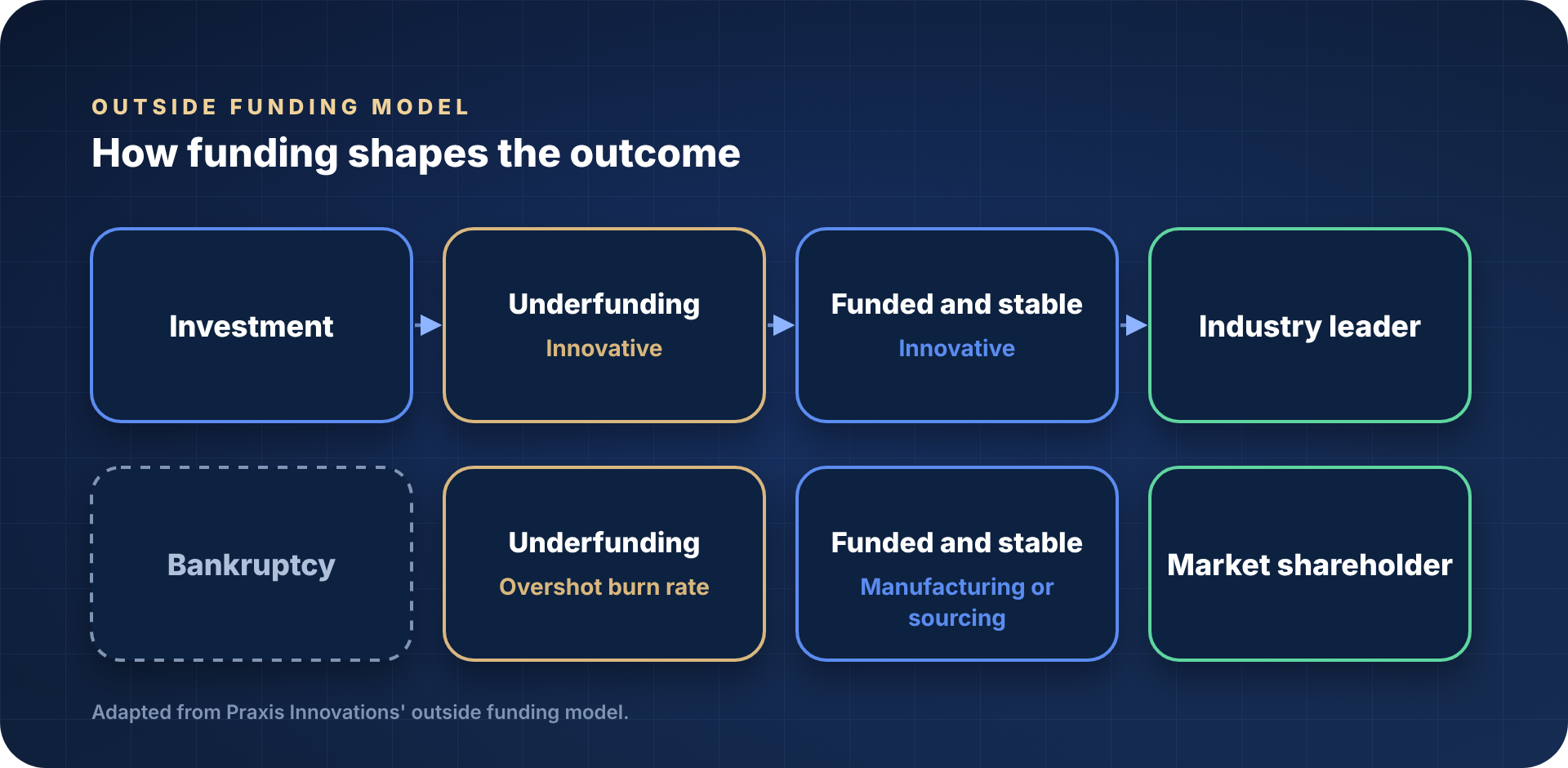
The outside funding model
How funding, or the lack of it, can shape where a company ends up. See funding resources →
A network built for commercialization
Praxis works with veteran marketing groups, manufacturers, and specialists in design and prototype development. They assess potential markets, identify the key players and help you understand every step of commercialization.
Explore the ecosystemQuestions about unused IP
Isn't my patent valuable on its own?
No. A patent, copyright or trademark has no commercial value by itself. Value comes from using it: licensing it, selling it or manufacturing a product.
Should I build the product before doing market research?
No. Research the market first, before you budget anything else. It tells you where the product fits, who benefits, and what your IP is really worth.
What is low-run manufacturing?
Producing a limited number of units so you can sell and learn before committing to large-scale production. Many manufacturers specialize in low volumes and scale on demand.
What does it cost?
The first evaluation is free. [ANSWER FROM REX: how ongoing work is priced]
Put your innovation into the marketplace.
Give us a call, book a free one-hour evaluation, or reach us at info@PraxisInnovations.com.