
What is intellectual property?
Creations of the mind that the law assigns to their owners. To prove an idea is yours, and to profit from it, you file the required documents and claim your rights.
Patents
Exclusive rights to make, sell or license an invention. In the U.S., you apply through the Patent and Trademark Office.
Trademarks
Protection for the names, logos and marks that identify your products.
Copyright
Protection for original written, visual and software works.
Industrial design
Protection for the look and shape of a product.
Three ways R&D pays back
All the research and development in the world won't turn into cash flow until your innovation is put to one of three uses.
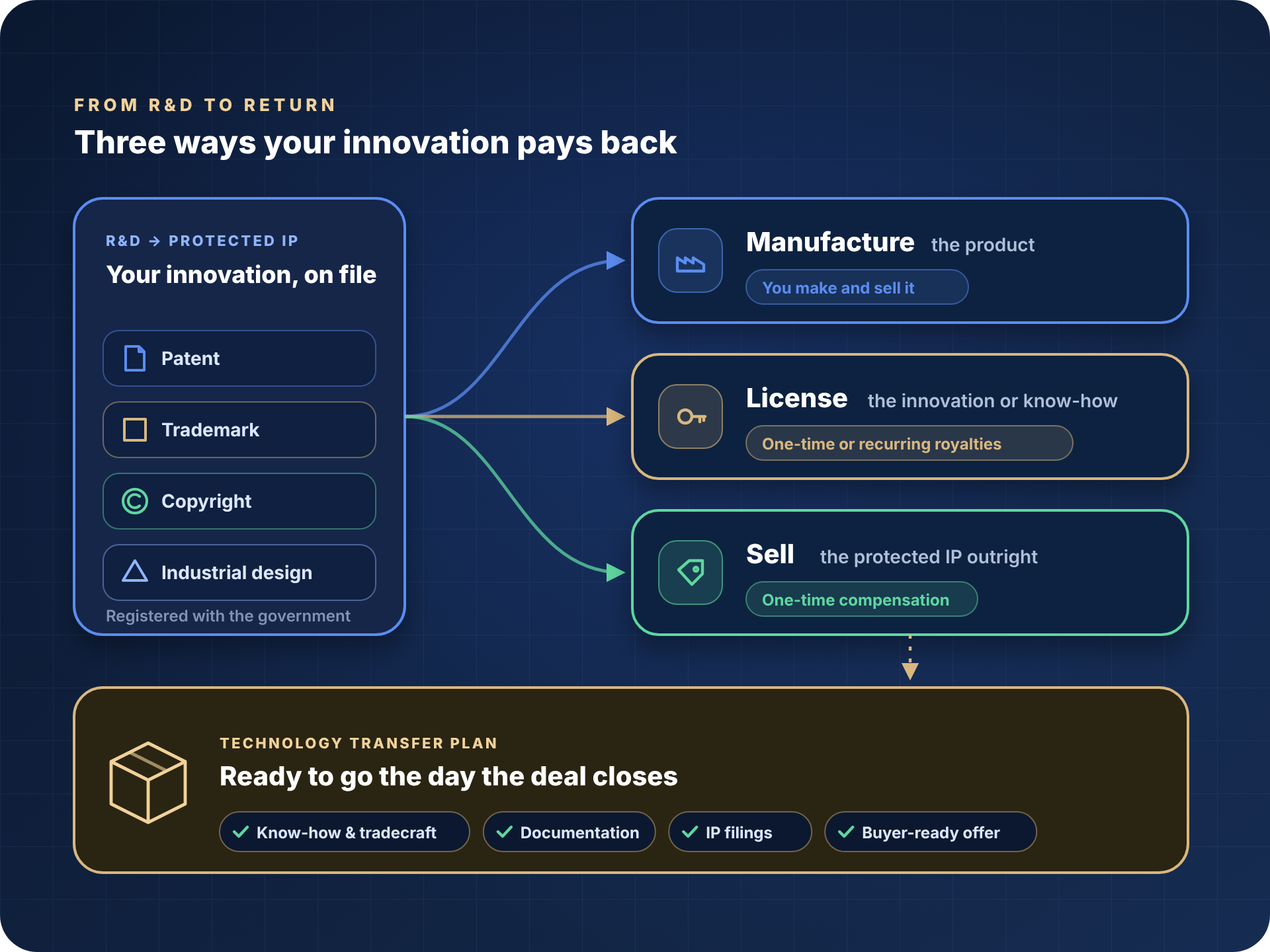
License the innovation
Rent your innovation or tradecraft for one-time or regular compensation. See Licensing →
Sell the IP outright
Transfer the protected intellectual property to a buyer for a one-time payment.
Sell, license or buy?
The right choice depends on your long-term strategic plan and your more immediate circumstances. Intellectual property should be an essential part of your business model.
Note: IP can support your freedom to operate, or block others from profiting from your innovation, but it doesn't guarantee freedom to operate.
The Praxis transfer system
Long known as a manufacturing efficiency firm, Praxis has developed a system to get the most out of an offer to license or sell intellectual property. Buyers get the knowledge they need, with the full technology transfer package ready to go the moment the deal is complete.
Uncharted water? Start with a no-fee evaluation meeting.
- 1No-fee evaluationReview your IP, your goals and your options.
- 2Choose the routeManufacture, license or sell, based on your strategic plan.
- 3Build the Technology Transfer PlanDocument the knowledge and tradecraft a buyer will need.
- 4Gauge the reactionTest how buyers respond to your offer.
- 5Fortify weak areasStrengthen anything that could lower your return.
- 6Close and transferHand over a ready-to-use package and maximize the return on your R&D.
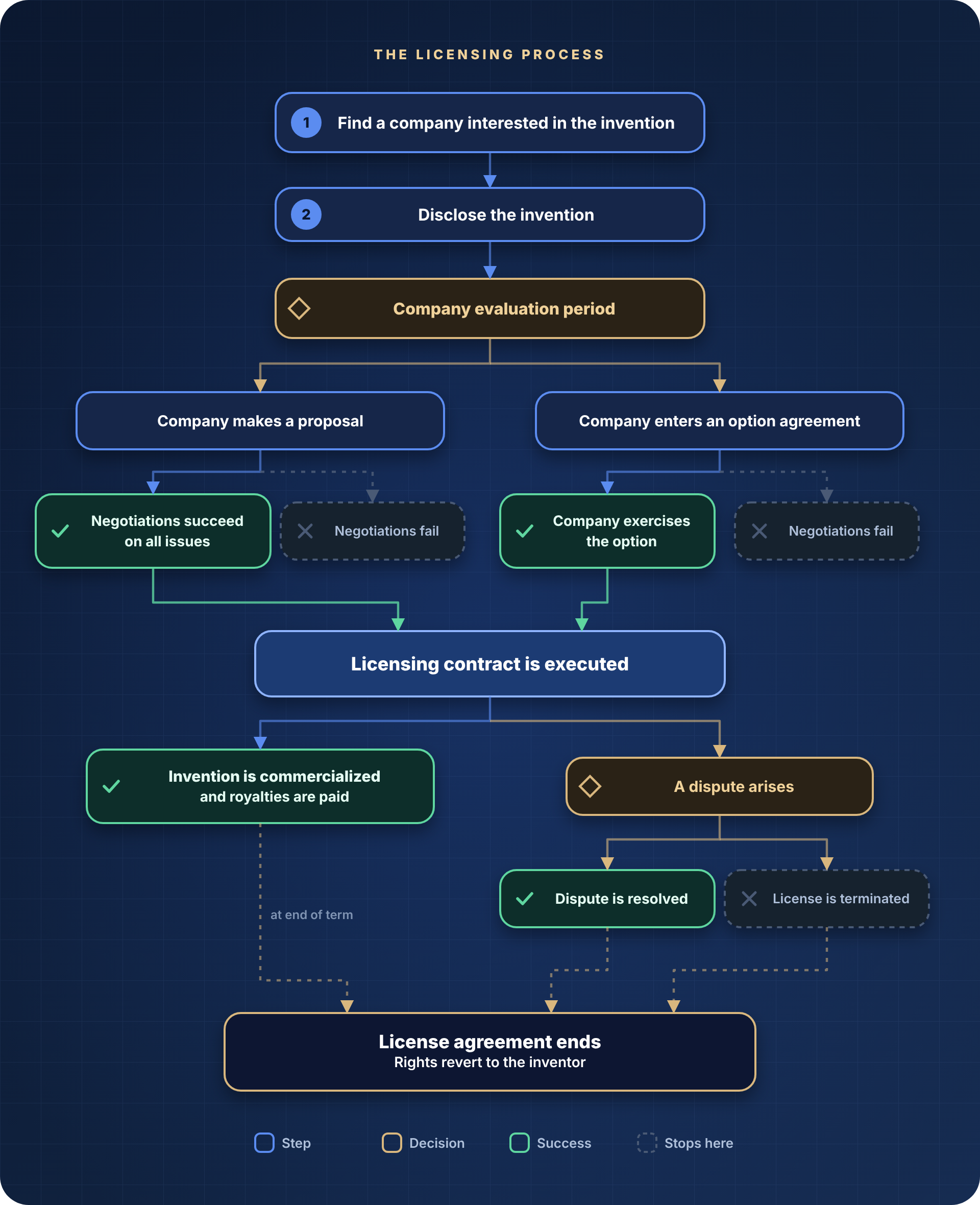
If you license: the process
Every path from finding a company to the day rights revert to you. More on licensing →
Questions about technology transfer
What is technology transfer?
Moving your innovation, and the knowledge needed to use it, to someone who will put it to work, in exchange for a one-time or recurring payment.
Do I need a patent to sell or license my technology?
To sell or rent knowledge, it has to be protected as a patent, trademark or copyright. In the U.S., patents are filed with the Patent and Trademark Office. We can point you to USPTO-registered professionals.
Does a patent guarantee my freedom to operate?
No. IP can support your freedom to operate and block others from using your innovation for their profit, but it doesn't guarantee it.
Should I sell or license?
It depends on your long-term strategy and your immediate circumstances. Licensing can create a revenue stream; selling can provide a partial liquidation. We'll help you weigh both.
What does the first meeting cost?
Nothing. The first evaluation meeting is free. [ANSWER FROM REX: how ongoing transfer work is priced]
Get the most from your R&D.
Book a no-fee evaluation, or reach us at info@PraxisInnovations.com.